Many Canadian provinces likewise have laws that actively prevent or straight-out forbid private insurance coverage plans from covering any of the advantages consisted of in the government program. what is health care. The UK's National Health Service likewise fits the meaning of single-payer, with the nation using basic tax income to spend for all citizens' health care.
Canada, by contrast, agreements with personal suppliers. Taiwan's health care system works likewise. New Zealand, Norway, Denmark and Sweden also have national health services similar to the UK, where the nation owns the providers and is accountable for paying them. No. Universal coverage refers to a system where all citizens have health protection.
Some universal-coverage nations have great deals of various payers. Japan and Germany, for instance, need people to register in one of dozens of competing health insurance plans (Japan has 3,500 insurance strategies; Germany has a more modest 300). These are normally called "multi-payer" healthcare systems. There are lots of resemblances in between single-payer and multi-payer countries like Germany and Japan. what is health care policy.
However they're still different paths Alcohol Rehab Center to getting a nation's population guaranteed. If you wish to get health economic experts into a furious argument, you must ask this concern. Some argue that Medicare, the federal program that covers all Americans over 65, counts as a single-payer system within the United States.
In A Free Market Who Would Pay For The Delivery Of Health Care Services? for Beginners
Medicare has a few of the attributes normally connected with single-payer: lower administrative costs and high rates of protection among elders. The Veteran's Administration and Medicaid are two other, federally-run insurance strategies that often get referred to as single payer in miniature. Other health economists, nevertheless, dislike this example. They argue that Medicare doesn't https://marcoxdxl254.skyrock.com/3339376014-Little-Known-Facts-About-How-Much-Would-Single-Payer-Health-Care-Cost.html count as single-payer since it's restricted to a specific set of Americans, and not provided to all residents.
That stops it from working out (or simply setting) rates as low Visit the website as those discovered in "real" single-payer systems. It does, nevertheless, negotiate rates lower than private health insurance providers. To put it another method: If everybody in the United States were over 65, Medicare would be our single-payer system. However considering that there are great deals of under-65-year-olds here it's not a real single-payer system.
However then, compared to the United States, basically every health-care system looks budget-friendly. Single-payer systems tend to have lower administrative costs than those with numerous private insurer, where doctors and hospitals dedicate lots of time to figuring out who is supposed to pay them what amount. One $12011 study in the journal Health Affairs estimated that American doctors invest 4 times as much cash interacting with healthcare payers than their Canadian counterparts.
Since doctors and pharmaceutical business basically have no choice but to accept the terms set out by the federal government, single-payer systems frequently include much, much lower rates than systems. The United States, for circumstances, pays far more for a lot of health-care services than single-payer systems do. It deserves keeping in mind that lots of multi-payer systems, like Germany, attain comparable savings to single-payer systems by having the federal government set healthcare costs. who is eligible for care within the veterans health administration?.
7 Simple Techniques For A Health Care Professional Should Question The Use Of Metoclopramide For A Patient Who Is Taking
Here's one graph from the Commonwealth Fund that looks at what percent of adults can get a same-day physician's consultation when they're sick (the single-payer systems below are Canada and the UK; all the rest, other than for the United States, likewise have universal coverage. Canada, a single-payer system, tends to have the longest wait times in this and other research studies; the issue has ended up being an increasing concern for lawmakers there.
For example, in the UK, a single-payer nation, it's much easier to get a same-day appointment than in the United States. And multi-payer systems like Germany frequently have much lower wait times than the United States. Two choices: if you're truly thinking about digging into your health care system, you can download a copy of T.R.
If you're trying to find something lighter, may we suggest a musical break from Canadian super-star Robin Sparkles. There's nobody, merged case versus openly funded healthcare systems, but there are a few arguments that show up often. One is that single-payer healthcare could suppress innovation by managing lower rates for healthcare suppliers and leaving them less area to explore brand-new treatments.
We pay more for nearly all medical treatments than openly financed systems do. According this theory, the money allows pharmaceutical companies, device producers, and other developers to explore brand-new, possibly revolutionary experiments. In that view, the United States' higher healthcare expenses are subsidizing medical developments that then multiply throughout the globe.
What Does Why Should Rising Health Care Costs Be Controlled? Do?
This has actually been a concern in Canada especially, where many provinces havedisallowed private plans that cover medical services in the federal program. The Canadian Supreme Court struck down this type of law in Quebec, mentioning long haul times in the general public system as a factor why personal strategies should have the ability to contend with the government.
Those dollars get divided up in a method that, in all worldwide examples offered, does not cover all the medical services that everybody wants. In single-payer systems, the federal government sets specifications for what services it will and will not cover. Nations typically do this by looking at which treatments are "cost-effective" health-care-speak for which medical interventions deliver excellent results at a lower price.
In Britain, for example, a firm called the National Institute for Healthcare Quality supervises of examining what treatments it will pay for and in which circumstances. Britain will restrict particular treatments to certain kinds of clients, based on where research study shows them to be most effective, which can frequently touch off fierce arguments.
That implies these individuals never get access to health-care treatments despite whether it might help. These people are successfully waiting forever, and that will not reveal up on surveys about wait times. Single-payer countries tend to get more beneficial rankings than the American health-care system. Here's a graph from the Commonwealth Fund's International Health Policy Research study, which reveals the percent of each country's locals who believe the health system "works well" with "minor modifications needed." Canada, Sweden, and the UK all have higher complete satisfaction rates with their health-care systems than the United States, with much more individuals who believe the system works well.
In A Free Market Who Would Pay For The Delivery Of Health Care Services? - The Facts
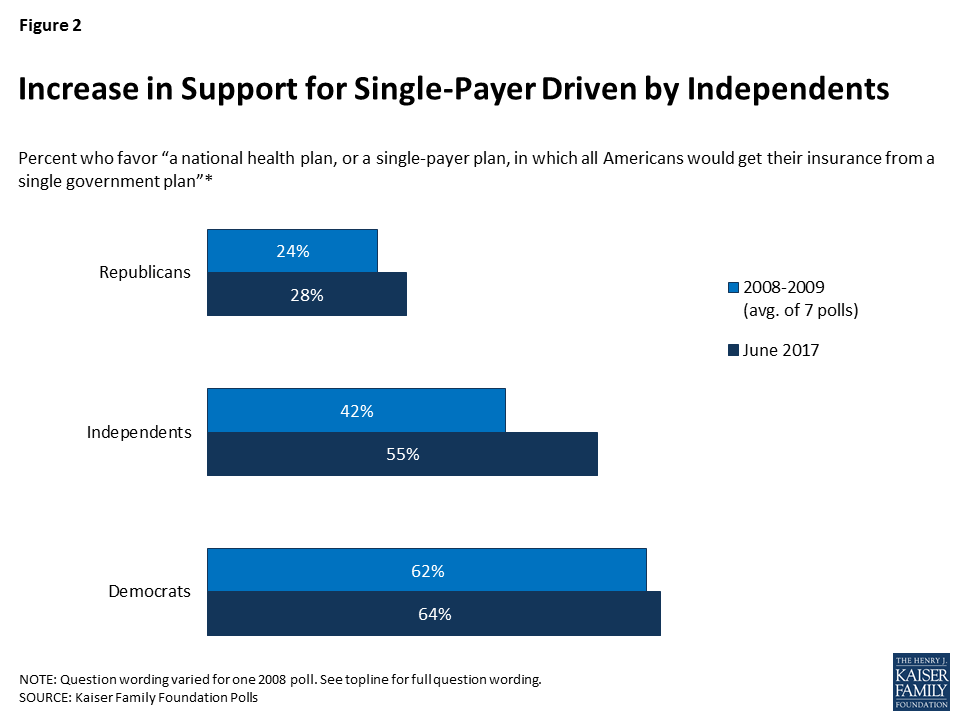
More of the latter: a single-payer system does not look most likely in the United States anytime quickly. Throughout the battle over Obamacare, even the general public option a single health plan run by the federal government that would face private rivals proved politically illogical in Congress. Seeing the undesirable political landscape, some states have actually explored the choice of constructing their own single-payer systems by themselves.